
The Prop Firm Passing Engine: Treating the Challenge as an Engineering Problem
Prop Firm Passing Engine: Treating the Challenge as an Engineering Problem
The Prop Firm Passing Engine is a systematic approach that treats a prop‑firm challenge like a piece of engineering rather than a gamble. By defining measurable rules, building repeatable algorithms, and using data‑driven analytics, a trader can reduce uncertainty and increase the odds of meeting the profit target while respecting drawdown limits.
Why view a prop‑firm challenge as an engineering problem?
Engineering solves well‑defined problems with known constraints, testable designs, and documented performance. A prop‑firm challenge presents the same ingredients:
- Constraints: maximum daily loss, overall drawdown, profit target, time limit.
- Inputs: market data, capital allocation, risk tolerance.
- Desired output: a verified profit figure without breaching any rule.
When you treat the challenge as an engineering task, you stop relying on intuition alone and start applying the same rigor you would use to design a bridge or a piece of software.
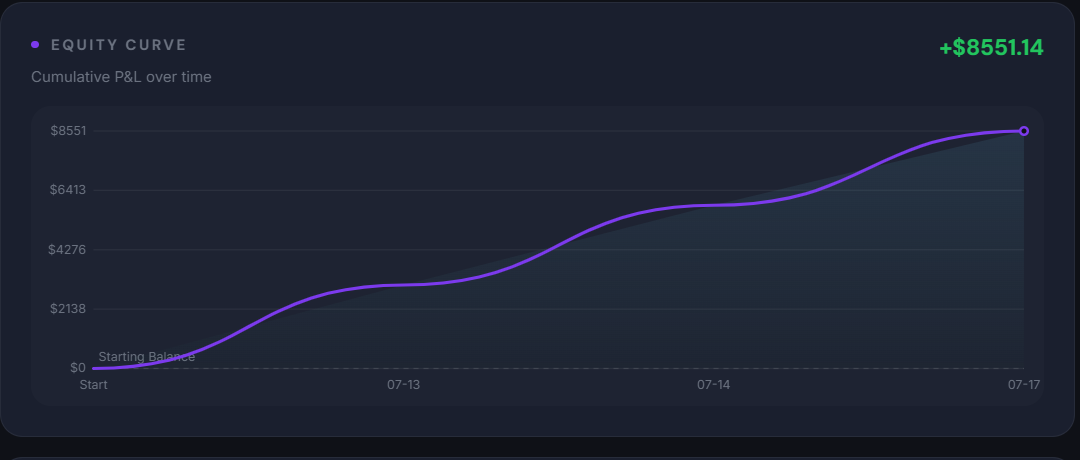
Step‑by‑step engineering workflow for passing a prop challenge
- Define the specification. Write down every rule the prop firm enforces (e.g., 5% max daily loss, 10% max overall drawdown, 10‑day profit target). Include any hidden constraints such as minimum trade size or allowed instruments.
- Collect baseline data. Use an automatic trade journal to record every trade you make on a demo account for at least two weeks. Capture entry/exit price, size, time, and the market conditions that prompted the trade.
- Extract performance metrics. From the journal calculate expectancy (average profit per trade), average R‑multiple (reward‑to‑risk ratio), and the frequency of rule breaches. These metrics become the engineering "performance indicators".
- Design the algorithmic core. Translate the successful patterns into a set of deterministic rules: entry condition, stop‑loss placement, profit‑target scaling, and position‑size formula. Keep the logic simple enough to be backtested tick‑by‑tick.
- Validate with tick‑level backtesting. Run the strategy on recorded market data at tick resolution. Look for intrabar sequencing errors—situations where a stop would have been hit before a profit target in real time but not in candle‑based tests.
- Iterate using behavioural analytics. Feed the backtest results into a behavioural analytics module that flags discipline gaps (e.g., occasional over‑sizing, missed stop‑losses). Adjust the algorithm or the rule set accordingly.
- Deploy in a live sandbox. Use a sub‑second execution environment to run the algorithm on a small capital allocation. Monitor real‑time order‑flow metrics such as cumulative volume delta and liquidity heatmaps to confirm the market behaves as expected.
- Finalize the passing engine. Once the sandbox proves the algorithm respects all constraints under live conditions, scale the position size to meet the prop‑firm profit target within the allowed time frame.
Measurable rules versus vague guidelines
Many traders rely on “stay disciplined” or “avoid overtrading” as vague advice. In an engineering context, every rule must be quantifiable:
Algorithmic tools that turn the engine into code
Building the passing engine does not require you to be a programmer, but you do need a platform that can translate the rule set into executable logic. Key capabilities include:
- AI Strategy Builder – a drag‑and‑drop interface that lets you define entry filters, stop‑loss logic, and position‑size formulas without writing code.
- Honest tick‑level backtesting – runs the strategy on the platform’s own recorded market data, ensuring no look‑ahead bias.
- Live algo deployment – executes the strategy with sub‑second latency, preserving the timing of stop and target orders.
- Behavioural analytics – tracks discipline metrics such as rule‑break frequency and trade‑size variance, feeding the results back into the design loop.
These tools embody the engineering principle of rapid prototyping: design, test, measure, and iterate.
Common pitfalls when treating a challenge like engineering—and how to avoid them
Even with a systematic approach, traders can stumble. The most frequent errors are:
- Over‑optimizing on historical data. Tweaking the algorithm until it fits past ticks creates a model that fails in live markets. Keep the rule set simple and validate on out‑of‑sample periods.
- Ignoring order‑flow signals. A purely price‑action algorithm may miss liquidity traps that cause stop‑run losses. Integrate flow lenses such as liquidity heatmaps or cumulative volume delta to confirm market intent before entry.
- Neglecting the human feedback loop. Automation can mask discipline lapses. Use the journal’s behavioural metrics to surface hidden tilt, then adjust the rule set or add a hard stop in the code.
- Assuming the engine is infallible. Engineering reduces risk, not eliminates it. Always keep a manual override to abort the algorithm if market conditions deviate dramatically (e.g., extreme volatility spikes).
The bottom line
Viewing a prop‑firm challenge as an engineering problem forces you to replace vague advice with measurable rules, build repeatable algorithms, and close the loop with data‑driven analytics. By following a disciplined workflow—specification, data collection, metric extraction, algorithm design, tick‑level validation, behavioural refinement, and live deployment—you turn a high‑risk test into a predictable engineering project.