
Consistency Rules in Prop Firms: Mastering Best‑Day Limits and Profit Pacing
Consistency Rules in Prop Firms: What They Are and How to Stay Inside Them
Prop firm consistency rules—most notably the best‑day percentage limits and profit‑pacing requirements—are the gatekeepers that separate traders who survive from those who get booted out. These rules are not arbitrary; they are built to protect the firm’s capital by preventing large, unsustainable spikes in risk. Understanding how they work and how to operate within them is essential for any trader aiming for a long‑term career in a prop environment.
Why Prop Firms Enforce Best‑Day Limits
A best‑day limit caps the net profit or loss a trader can generate in a single trading session, usually expressed as a percentage of the allocated account balance. The logic is simple: a sudden 15% gain may look impressive, but it often comes from a handful of large, high‑risk bets that could just as easily reverse into a catastrophic loss. By forcing traders to stay under a modest daily ceiling—commonly 5% to 8%—the firm encourages steady, risk‑adjusted growth rather than gambling on outsized moves.
How Profit Pacing Rules Shape Your Trading Day
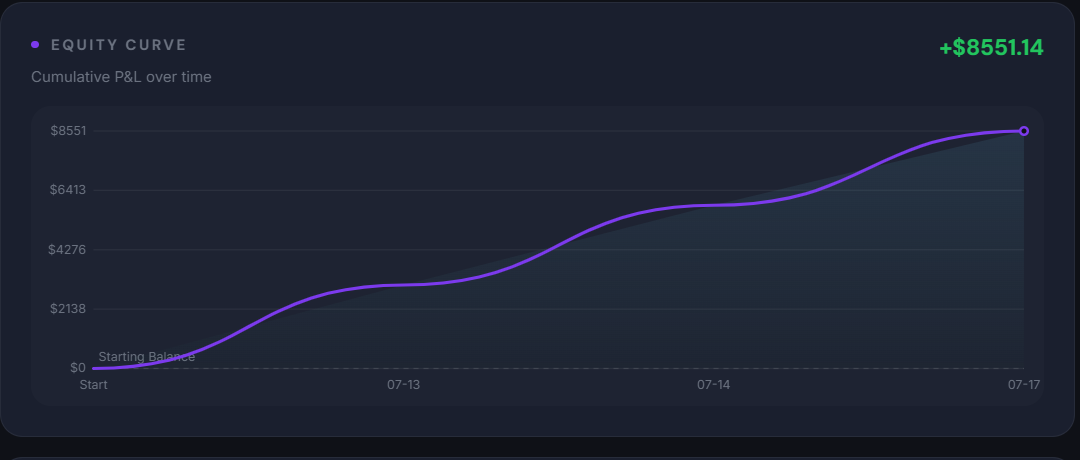
Profit pacing is a second layer of consistency control. Instead of letting a trader run a winning streak unchecked, the firm may require that profits be earned gradually, for example no more than 2% of the account per hour or a maximum of 50% of the day’s allowed profit before taking a mandatory break. This prevents fatigue‑driven overtrading and reduces the chance of a large reversal after a hot hand.
Key Components of Consistency Rules
- Best‑Day Percentage Cap – the absolute upper bound on net P&L for the day.
- Hourly Profit Threshold – a sub‑limit that forces traders to pause once a certain profit level is reached within an hour.
- Maximum Trade Count – a cap on the number of executed trades per session to curb excessive churn.
- Drawdown Buffer – a small percentage of the day’s profit that can be lost without breaching the best‑day cap.
Common Mistakes That Violate Consistency Rules
Even experienced traders slip up when the adrenaline of a winning streak kicks in. The most frequent infractions include:
- Chasing the next big win after hitting the daily profit limit.
- Scaling into larger positions to accelerate profit pacing, which inflates risk per trade.
- Ignoring the firm’s mandatory break rules and continuing to trade while fatigued.
- Failing to record trades accurately, which makes it impossible to verify compliance.
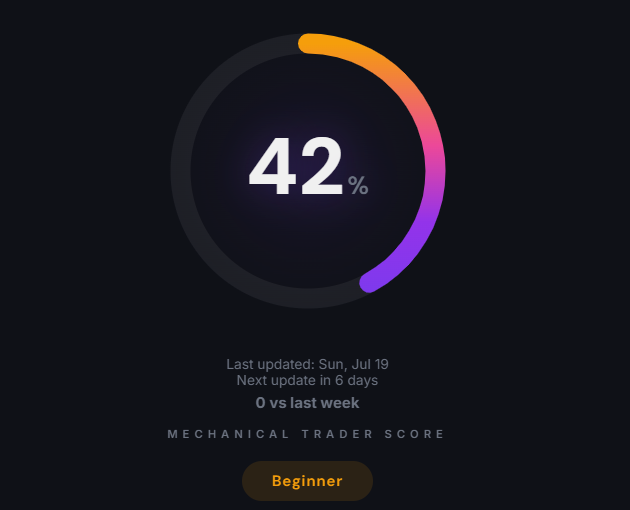
These errors can be caught early with a robust trade journal that automatically tracks daily totals, hourly slices, and trade counts. Platforms that provide behavioural analytics—such as Tim Edge’s automatic journal and consistency metrics—help surface these patterns before they become rule violations.
Step‑by‑Step Process to Stay Within Consistency Rules
- Set Your Daily Target: Calculate the maximum profit you can earn without breaching the best‑day cap. For a $100,000 allocation with a 6% limit, your target is $6,000.
- Break It Down Hourly: Divide the daily target by the number of trading hours you intend to be active. Using a 6‑hour session, aim for $1,000 per hour.
- Pre‑Define Position Size: Use a fixed fractional risk model (e.g., 1% of account per trade) so each trade contributes a predictable amount to the hourly total.
- Monitor Real‑Time P&L: Keep a live view that shows cumulative profit, hourly profit, and remaining allowable profit for the day.
- Enforce Mandatory Breaks: When you hit the hourly threshold, stop trading for the remainder of the hour. Use this time for market observation or a quick review.
- Log Every Trade Instantly: An automatic journal ensures you have an audit trail that the prop firm can verify without manual reconciliation.
- Review Post‑Session: At the end of the day, compare actual profit against the target, note any deviations, and adjust your plan for the next session.
Comparing Prop Firm Consistency Frameworks
| Feature | Firm A (Tight) | Firm B (Moderate) | Firm C (Loose) |
|---|---|---|---|
| Best‑Day Cap | 5% of allocation | 7% of allocation | 10% of allocation |
| Hourly Profit Limit | 1.5% of allocation | 2% of allocation | 3% of allocation |
| Max Trades/Day | 30 | 45 | 60 |
| Mandatory Break After Limit | Yes, 30‑minute pause | Yes, 15‑minute pause | No mandatory pause |
Choosing a firm whose rules match your trading style is part of the overall strategy. A tighter framework may suit traders who excel at small, high‑probability setups, while a looser structure can accommodate those who prefer larger, less frequent moves.
Practical Tools to Enforce Discipline
Beyond manual spreadsheets, several technology solutions automate compliance:
- Real‑time P&L overlays on your charting platform that change color when you approach the hourly limit.
- Algorithmic stop‑loss on profit that automatically exits positions once the day's profit ceiling is reached.
- Behavioural analytics dashboards that highlight spikes in trade frequency or size, indicating a drift toward rule breach.
Tim Edge’s Flow terminal can flag when your trade count or profit rate exceeds typical levels, giving you a visual cue before you overstep.
The Bottom Line
Consistency rules—best‑day caps and profit pacing—are designed to keep risk in check and encourage sustainable growth. By breaking down daily targets into hourly goals, using fixed fractional risk, and leveraging automated journaling and analytics, you can stay inside the limits, protect your capital, and build a track record that prop firms value.