
Spread, Slippage and Fills: The Hidden Costs That Eat Your Intraday Edge

Spread, slippage and fills: the hidden costs that eat your intraday edge
Spread, slippage and fill quality are the three silent profit killers that turn a well‑planned intraday trade into a losing one. Even a strategy with a solid expectancy can be wiped out when the market charges you more than you anticipate at the moment of execution.
Understanding exactly how each cost is generated, how they interact, and what you can do to keep them under control is essential for any trader who relies on tight stops and frequent entries.
What is a spread and why does it matter on short timeframes?
The spread is the difference between the best ask (price you can buy at) and the best bid (price you can sell at) at any given moment. It is a built‑in cost that exists because market makers need compensation for providing liquidity.
On intraday charts, especially when you trade with 1‑minute or tick bars, the spread can represent a large portion of your target move. If you aim for a 5‑tick profit and the spread is 2 ticks, you have already lost 40% of the potential gain before the market even moves.
How does slippage occur and when is it most likely?
Slippage happens when the price at which your order is finally filled differs from the price you saw when you placed the order. The most common causes are:
- Rapid price movement (news, economic releases, or large market orders)
- Low liquidity at the price level you are targeting
- Order queue depth – your order sits behind many others and the market moves away
Slippage is especially pernicious for market‑order entries on volatile instruments like Bitcoin or Gold, where a single second can see several ticks of movement.
What is a fill and why does fill quality matter?
A fill is the actual execution of your order. Fill quality refers to how closely the executed price matches the price you intended, and whether the order was fully executed or partially filled.
Partial fills are a hidden cost because they force you to either wait for the remainder (exposing you to additional market risk) or to re‑enter at a worse price. Full fills at a worse price are simply slippage, but the distinction matters when you are using limit orders to control entry price.
Cost stacking: how spread, slippage and fill quality combine on intraday trades
Each cost on its own can be managed, but together they create a compounding effect:
- Spread reduces the distance between your entry and stop‑loss.
- Slippage pushes your entry further away from the ideal price, often widening the effective stop‑loss.
- Fill issues (partial fills or delayed fills) add extra exposure time, giving the market more room to move against you.
The net result is a higher breakeven point and a lower win‑rate, even if your underlying strategy is unchanged.
Measuring the hidden costs in your own data
Without precise numbers you cannot improve. Use an automatic trade journal to capture the following fields for every intraday trade:
- Quoted spread at the moment of order submission
- Requested price vs. filled price (slippage amount)
- Full vs. partial fill flag and time to complete fill
- Resulting effective stop‑loss distance after all costs
Aggregating these metrics over a week reveals whether you are paying a 1‑tick, 2‑tick, or larger hidden cost on average.
Tools and tactics to shrink the cost stack
Below are practical steps that have proven to reduce each component without sacrificing execution speed.
| Cost | Mitigation Tactic | Why it works |
|---|---|---|
| Spread | Trade during high‑liquidity windows (e.g., overlap of major sessions) | More participants tighten the bid‑ask gap. |
| Spread | Use limit orders instead of market orders for entry | Limits guarantee you never pay more than the quoted ask. |
| Slippage | Deploy sub‑second algo execution | Reduces the time between decision and order reaching the market. |
| Slippage | Avoid trading right before scheduled news releases | Price volatility spikes cause larger gaps. |
| Fill quality | Set appropriate order size relative to displayed depth | Large orders that exceed depth are sliced, causing partial fills. |
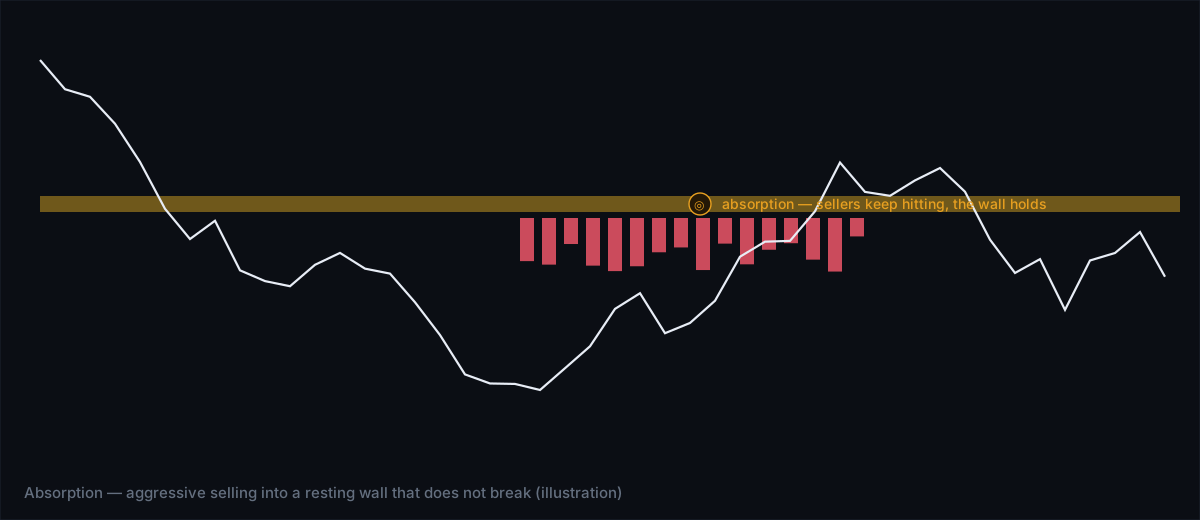
| Fill quality | Enable iceberg detection and absorbtion alerts | Knowing when hidden liquidity is present helps you size orders wisely. |
Platforms that provide real‑time order‑flow lenses—liquidity heatmaps, footprint charts, and automatic iceberg detection—make it easier to apply these tactics. Tim Edge, for example, bundles these lenses in its Flow terminal, letting you see the exact depth before you click.
When does the cost stack become unacceptable?
Set a personal threshold based on your strategy's average target move. A common rule of thumb is that total hidden cost should not exceed 20% of your expected profit per trade. If you target a 10‑tick move, the combined spread, slippage and fill penalty should stay under 2 ticks.
If you regularly breach this limit, you will see a gradual erosion of expectancy, even if your win‑rate looks healthy on paper.
How to backtest with realistic cost assumptions
Most backtests use mid‑price candles, which ignore spread and slippage. To get a realistic picture:
- Download tick‑level data that includes bid and ask quotes.
- Simulate order entry by applying the quoted spread at the time of signal.
- Add a slippage model: for each trade, add a random offset drawn from the recent distribution of actual slippage observed in your journal.
- Reject trades that would have been partially filled based on depth‑of‑book snapshots.
This approach yields a more honest expectancy that reflects the true cost stack.
The bottom line
Spread, slippage and fill quality are not optional expenses; they are integral parts of every intraday trade. By measuring them rigorously, using order‑flow tools, and incorporating realistic cost assumptions into backtests, you can protect the edge you have worked hard to build.