
Why Every Serious Trader Needs a Trading Journal to Build Their Edge

Keeping a trading journal is one of the most effective ways to improve your trading performance, yet many traders neglect this crucial step. A trading journal is a record of all your trades, including the date, time, asset, entry and exit points, and any relevant notes or comments. It's a tool that helps you track your progress, identify patterns and mistakes, and refine your strategy over time.
The Basics of a Trading Journal
A trading journal is not just a simple log of your trades. It's a detailed record that includes both quantitative and qualitative data. Quantitative data includes metrics such as profit and loss, win/loss ratio, and average trade duration. Qualitative data, on the other hand, includes your thoughts, feelings, and observations about each trade. This can include notes on market conditions, your emotional state, and any challenges you faced during the trade.
The Pain of Manual Logging
Many traders start out using a spreadsheet to keep their trading journal. While this can be a good starting point, it can quickly become tedious and time-consuming. Manual logging requires you to input data for each trade, which can be prone to errors and inconsistencies. Additionally, it can be difficult to analyze and visualize the data, making it hard to identify trends and patterns. As a result, many traders give up on keeping a journal altogether.
This is where an automatic trade journal comes in - a feature offered by platforms like Tim Edge. With auto-journaling, every trade is automatically recorded and analyzed, saving you time and reducing the risk of errors. This allows you to focus on what matters most - improving your trading performance.
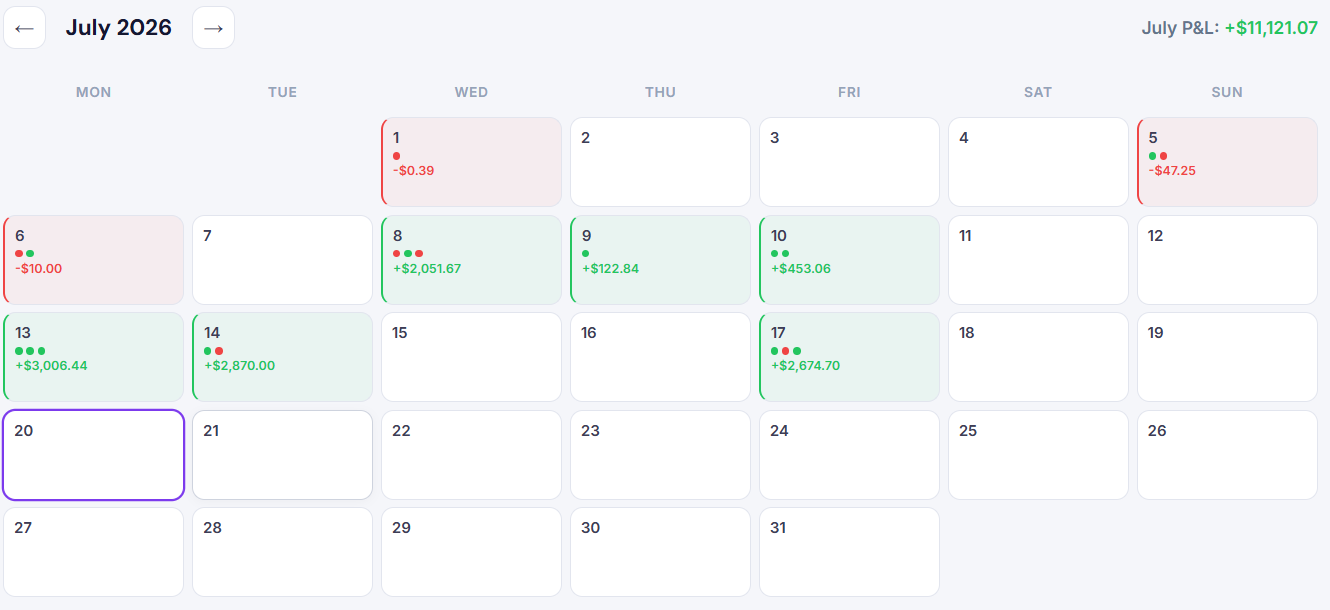
What Auto-Journaling Changes
Auto-journaling changes the game for serious traders. With all your trade data automatically recorded and analyzed, you can gain valuable insights into your trading behavior and performance. You can identify areas for improvement, such as over-trading or impulsive decision-making, and develop strategies to overcome them. You can also track your progress over time, seeing how your performance improves as you refine your skills and strategy.
Moreover, auto-journaling enables you to track your behavioral analytics, including discipline and consistency. By analyzing your trading data, you can identify patterns and trends that may be holding you back, such as fear, greed, or impatience. With this knowledge, you can develop the discipline and consistency needed to become a successful trader.
From Insights to Action
Having a trading journal is not just about collecting data; it's about using that data to drive improvement. By analyzing your journal, you can identify areas where you need to adjust your strategy or behavior. You can then use this knowledge to inform your future trades, making more informed decisions and avoiding costly mistakes. With the right tools and mindset, you can turn your journal into a powerful tool for growth and development as a trader.
For serious traders, a trading journal is not a luxury - it's a necessity. By leveraging auto-journaling and behavioral analytics, you can take your trading to the next level, building the discipline and consistency needed to succeed in the markets. Whether you're just starting out or looking to refine your skills, a trading journal is an essential tool that can help you achieve your goals.