
From Journal to Funded: A Realistic Roadmap for Prop Traders

From Journal to Funded: A Realistic Roadmap for Prop Traders
Turning a trading journal into a funded prop account requires more than good ideas; it needs disciplined data, measurable analytics, a testable strategy, automated execution, and real‑time order‑flow insight. This roadmap lays out each link in the chain and shows how to move from recorded trades to a live funded challenge without skipping essential steps.
Why the Journal Is the Starting Point, Not the End
A journal is more than a notebook of wins and losses. It is the raw data set that lets you answer three critical questions:
- What patterns repeat? – Identify recurring setups, entry times, and market conditions.
- Where does discipline slip? – Spot missed stop‑losses, size creep, or trade clustering.
- What is the true expectancy? – Combine profit factor, average R‑multiple, and drawdown behavior.
Without a complete, automatically captured journal, you risk missing trades, mis‑recording slippage, or relying on memory—errors that magnify once you stake real prop capital.
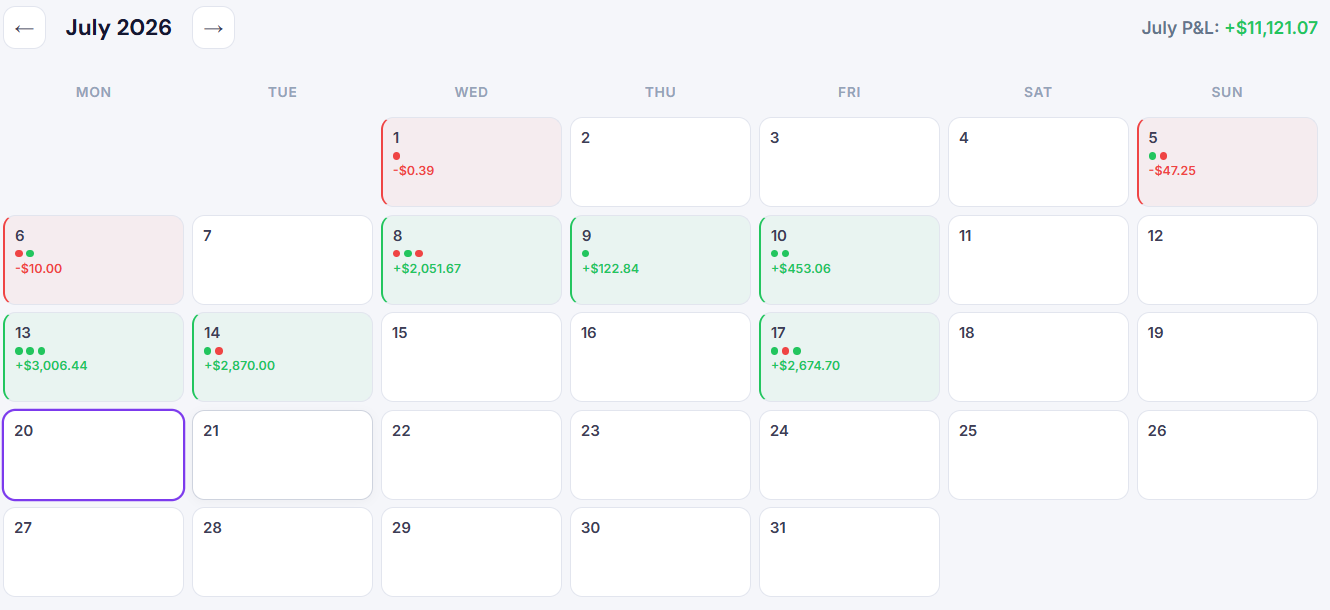
Step 1: Convert Journal Entries into Behavioural Analytics
Behavioural analytics turn raw entries into actionable metrics that show how consistently you follow your own rules and how stable your performance is.
Step 2: Build a Strategy Based on the Analytics
Analytics point to the most profitable and repeatable setups. Use them to draft a concrete strategy:
- Entry criteria – Define the market condition (e.g., price crossing the 3‑day POC on the volume profile while CVD turns positive).
- Risk parameters – Set a fixed % of equity per trade, calculate position size, and embed a hard stop.
- Exit rules – Use a combination of profit target (e.g., 2R) and dynamic exit (e.g., when delta reverts or liquidity heatmap shows absorption).
Write the rules in plain language; later you will translate them into code.
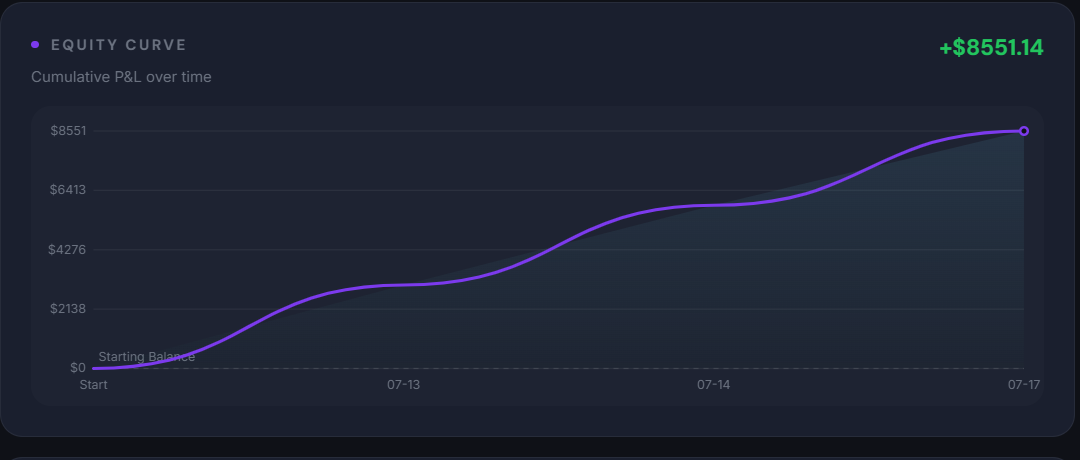
Step 3: Validate with Tick‑Level Backtesting
Backtesting on tick data, not just candle closes, reveals intrabar sequencing effects that can destroy a strategy when live. The validation process includes:
- Run the strategy on Tim Edge’s recorded market data, which provides honest tick‑level fills.
- Check for look‑ahead bias – ensure the algorithm never sees future ticks.
- Measure realistic fill rates, slippage, and commission assumptions.
- Compare expectancy and max drawdown against the prop firm’s limits.
If the backtest shows a positive expectancy and drawdown within the firm’s max‑drawdown rule, you have a candidate strategy ready for automation.
Step 4: Translate the Strategy into an Algo
With a validated rule set, the next step is to code the algorithm. Key considerations:
- Sub‑second execution – Use a platform that can send orders in milliseconds to capture the momentary price moves identified in the backtest.
- Order‑type selection – Market orders for aggressive entries, limit orders for precise exits, and stop‑limit for risk protection.
- Fail‑safe logic – Include a circuit‑breaker that halts trading if daily loss exceeds the prop firm’s daily‑drawdown threshold.
Testing the algo in a paper‑trading environment confirms that the code reproduces the backtest results under live market latency.
Step 5: Add Real‑Time Order‑Flow Insight with Flow Tools
Even the best algo can be tripped by hidden liquidity. Integrating a live order‑flow terminal gives you a safety net:
| Flow Lens | What It Shows | How It Helps the Algo |
|---|---|---|
| Liquidity Heatmap | Brightness indicates order concentration at each price level. | Avoid entering when the heatmap shows a strong wall that could cause a bounce. |
| Footprint Chart | Bid‑ask volume inside each candle. | Confirm delta direction before the algo fires a market order. |
| Iceberg Detection | Hidden large orders split into small slices. | Prevent premature entry into a price zone that will be absorbed. |
These lenses are available for Bitcoin and Gold, the two assets most commonly used in prop challenges. By feeding the algo with real‑time flow signals (e.g., pause entry if CVD turns negative), you reduce false triggers and improve win rate.
Step 6: Structure the Prop Firm Challenge
Now you have a journal‑driven, analytics‑backed, algorithmic, flow‑enhanced system. The final piece is to align it with the specific rules of the prop challenge you plan to attempt:
- Account size and leverage – Scale position size to meet the firm’s max‑risk‑per‑trade limit.
- Drawdown rules – Program the algorithm to stop trading once the daily or trailing drawdown limit is hit.
- Profit‑pacing requirements – Some firms require a minimum profit per day; schedule the algo to run only during high‑liquidity sessions identified by the flow heatmap.
- Consistency metrics – Use the behavioural analytics to ensure you stay within the firm’s best‑day or profit‑cap constraints.
Run a final 48‑hour simulated challenge using live market data but without real capital. Review the journal automatically generated by the platform; if any rule was breached, adjust the algo or the risk parameters before the real test.
The Bottom Line
Moving from a journal to a funded prop account is a sequential process: capture every trade, turn the data into discipline metrics, craft a repeatable strategy, backtest it on tick data, automate it with sub‑second execution, overlay live order‑flow insight, and finally match the system to the prop firm’s challenge rules. Each step builds on the previous one, ensuring that when you finally submit your challenge, you are not guessing—you are executing a data‑driven edge.
Tools that combine automatic journaling, behavioural analytics, AI‑assisted strategy building, and real‑time flow (such as Tim Edge) make this roadmap practical for the serious retail trader.